Mnemonics -- Fascinating facts about the brain and memory
Wellness & Yoga with Christine | AUG 18, 2020
mnemonics
memory
moonwalking with einstein
joshua foer
wellness
brain facts
fascinating facts
Mnemonics -- Fascinating facts about the brain and memory
Wellness & Yoga with Christine | AUG 18, 2020
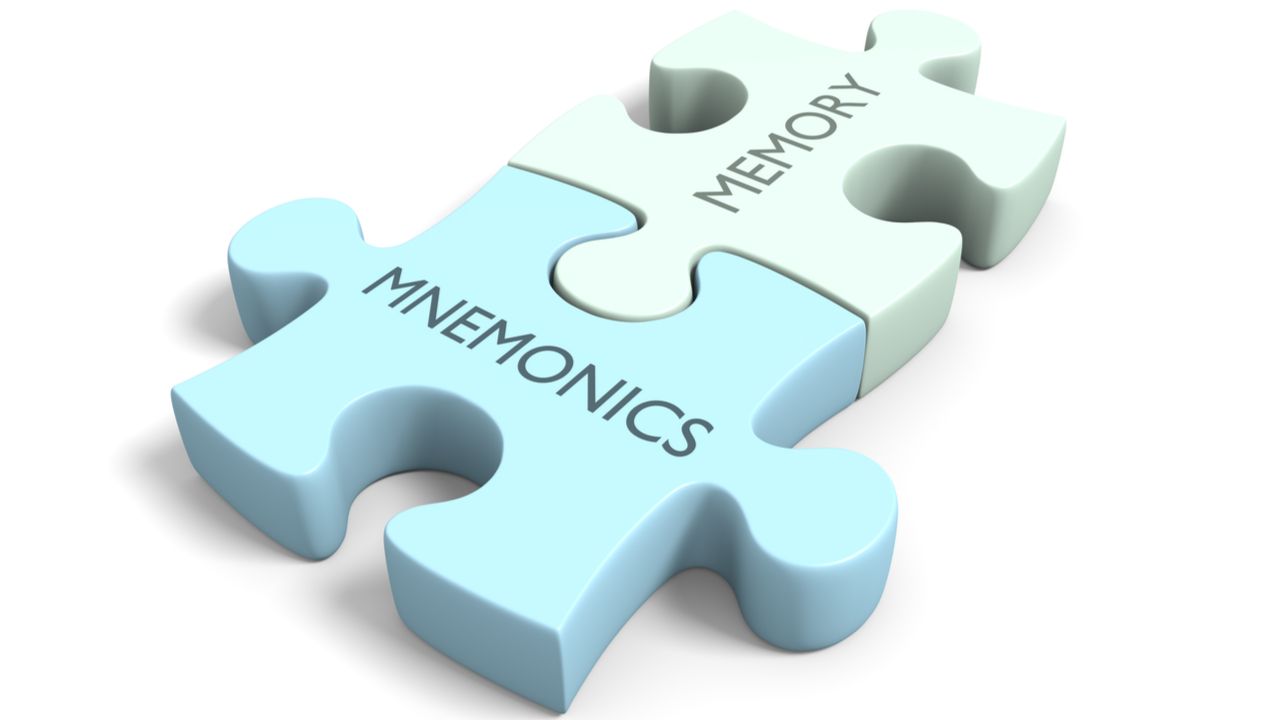
People supposedly squander forty days per year looking for things they’ve forgotten or misplaced. That’s more than 10% of the year! If only we could have perfect memories. Aren’t you in awe of people with great memories? They always seem to have a fitting anecdote or historical fact at the ready. They seem so wicked smaht, as local Bostonians would say (sounds strange when I say it with my German accent). While I have a good memory for business stuff, I often cannot remember the name of a movie I recently watched and I’m terrible at telling jokes because I rarely remember the punch line. And let's not even talk about my bad memory for names. Can you relate?
A few months ago, NPR aired an interview with Joshua Foer, the author of Moonwalking with Einstein: The Art and Science of Remembering Everything. Joshua Foyer is a journalist who decided to study the science of memorization to write this book and won the U.S. Memory Championship in the process. When Bill Gates also mentioned this book on his summer book list for 2020, I knew I had to read it. It proved to be a smart and humorous book about the history and science of memory, and the techniques people use to train their memories.
Did you know….?
Did you know that the adult brain weighs about 3 pounds (2-3% of the typical adult’s body weight), but uses up to 20% of the body’s oxygen and blood? It’s also where 20-25% of our RMR (resting metabolic rate) calories are burned. That’s one energy-greedy part of our body! Unfortunately, studies have shown that intensive use of the brain doesn’t use up more calories, so your idea of thinking really hard to burn more calories and lose weight won’t work. Finally, the brain is about 73% water, which is why dehydration can happen so easily. Here’s to drinking more water!
Did you know it’s a myth that humans only use 10% of their brains. We actually use most of our brain most of our time, even when we do something very simple such as watching cat videos on YouTube. Even when we sleep, we use more than 10% of our brain.
Did you know that the principles behind memory training haven’t changed much in over 2000 years? They were first described in a short, anonymously authored Latin textbook called Rhetorica ad Herennium, written sometime around 85 B.C. These memory techniques were widely practiced in the ancient world. Every literary person knew them. Memory training was considered a central piece of classical education, on par with grammar, logic, and rhetoric. Students were taught not just what to remember, but how to remember it. Don’t you wish you had that training in school? I sure do. Might have been more useful than my eight years of Latin classes.
Did you know that memory champions don’t have photographic memories; instead, they turn numbers and words into images and then place those images into “memory palaces”. The more outlandish and vulgar the image, the more likely it will stick. (That’s where the book’s title comes from: Einstein walking on the moon was one of the created images the author used). Unfortunately, it takes a lot of effort and creativity to come up with these thousands of images and imaginary palaces, so that is probably not the solution to remembering people's names.
Did you know that we can only keep track of about roughly seven things at a time? Some people can only hold five things in their head at any given time and few people can hold as many as nine. But seven seems to be the average capacity of our short-term working memory. And those seven things only stick around for a few seconds, and often not at all if we are distracted.
Did you know that time appears to move slower when we pack our lives with memories? This curious warping and shortening of psychological time was first written about in 1890. In our youth, we have new experiences all the time, so time appears to move slowly. As we get older, many of these experiences have turned into automatic routines which we hardly notice at all. This creates long stretches of time that we cannot remember. The past few months during COVID certainly feel like that to many of us – one day is just like the next day. That is why it’s so important to change routines regularly, take trips to new places, and have as many new experiences as possible that can serve to anchor our memories. Creating new memories stretches out psychological time and lengthens our perception of time. Here’s to creating new memories!
My takeaway from reading this book is that most of us will never become memorization champions. When it comes to remembering names at social gatherings, it’s helpful to follow the advice of Ron White, a twice winner of the USA Memory Championships: focus on the person you are talking to, repeat the name back (“Nice to meet you, Carolyn”), stay present in the conversation, pick out a facial feature in that person that is easy to remember, connect the name or face with a visual image, and repeat the name when you say goodbye.
We should also look for more ways of changing up our routines and creating new adventures to extend the psychological time. Who wants to jump out of an airplane with me next week??
Be well,
Christine
P.S. If you enjoyed this article, I invite you to sign up for my free wellness newsletter:
Wellness & Yoga with Christine | AUG 18, 2020
Share this blog post

 OfferingTree