How to practice yoga with a knee injury (video included)
Wellness & Yoga with Christine | NOV 6, 2021
knee injury
bum knees
yoga pose modifications
yoga props
How to practice yoga with a knee injury (video included)
Wellness & Yoga with Christine | NOV 6, 2021

Let's start with a super-short anatomy session: the knee joint is the largest joint in our bodies. Just like our fingers, the knee is a hinge-type joint. That means its main motion is the "hinging" of bending and straightening the knee. The knee joint does allow for a small amount of rotation when bent, but its basic function is to bend ("flex") and straighten ("extend").

Most of my yoga students are in midlife and a number of them have bum knees, either from an injury or from general wear-and-tear. But that doesn't stop them from enjoying the benefits of yoga. And it shouldn't stop you!
I hope it goes without saying that if you’ve had a major knee injury or surgery, don't practice yoga (or do any other physical exercise) until you get clearance from your doctor!
Once your acute injury has had some time to heal, your doctor will probably tell you that you need to keep (or start) a regular exercise routine to maintain strength and mobility in your knees. But many common exercises, such as running, tennis, and group exercise classes at the gym put too much impact on your knee joints.
In contrast to those high-impact exercises, yoga is a low-impact exercise. It increases your heart rate while minimizing the amount of stress on your joints. It's good for people with knee pain because it can reduce chronic pain while improving mobility, physical fitness, and overall quality of life. It's also wonderful at lowering your stress level and connecting you with your body.
And even better, yoga can be customized to any person. And that means that if you're dealing with an injury, you can modify your yoga practice to fit your needs. I encourage all my students to listen to their bodies and to take variations of poses and transitions in my group classes. That's why I offer modifications in my classes. I also invite students who are dealing with specific injuries to book a private session with me (if that's an optional financially), so we can customize poses and transitions specifically for your body.
Understanding which yoga poses to practice (and to avoid) and how to modify them can ensure that you enjoy the maximum benefits of a regular yoga practice.
I find that students with bum knees experience discomfort when their knees are fully bent ("in maximum flexion") and experience sensitivity when putting weight on their knees. To alleviate that discomfort, I encourage my students to use props to minimize that maximum flexion (e.g., yoga wedge, yoga block, bolster, rolled-up blanket or towel) and to cushion their knees (e.g., yoga knee pads, folded blanket or towel, folded-over yoga mat).
And because the knee is not meant to rotate significantly, every yoga student, especially those with knee issues, needs to learn to stabilize the knee joint in yoga poses and to emphasize rotating from the hip joint rather than the knee joint whenever rotation of the leg is required.
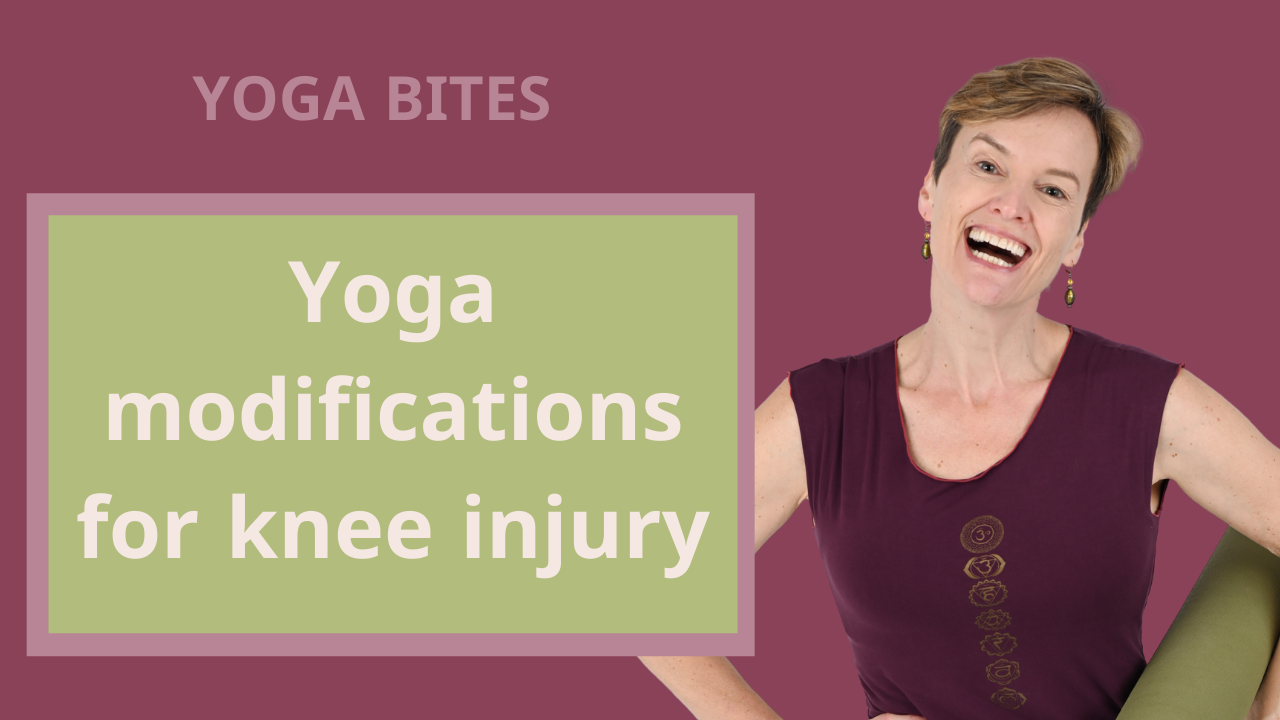
In the following video, you'll discover how to use props and how to modify particular poses to make them more accessible for anyone suffering from a past knee injury. I think you'll find it helpful.
Wishing you a wonderful week!
Best,
Christine
P.S. I invite you to sign up for my weekly wellness newsletter. As a bonus, instantly receive a free video series ("Yoga Bites"), where you discover effective yoga tools to relieve stress and regain your energy in just 5 minutes!
Wellness & Yoga with Christine | NOV 6, 2021
Share this blog post

 OfferingTree